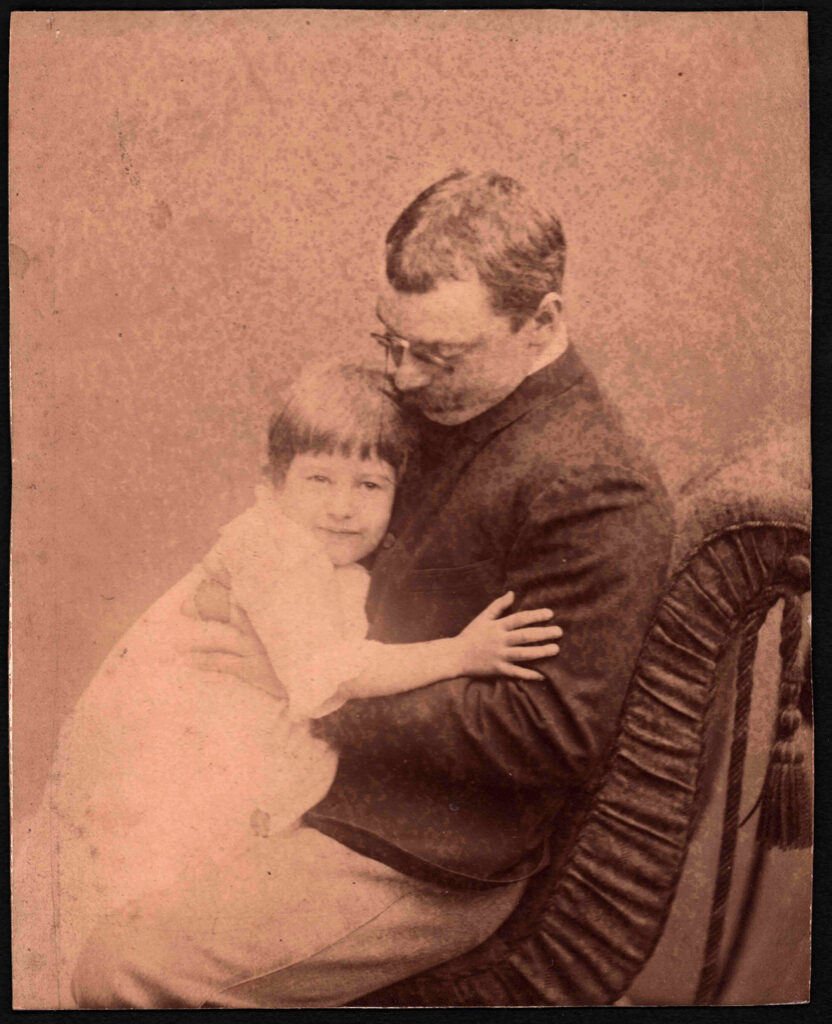
Thanks to a generous donation from the Becker family, the Forum Queeres Archiv München (FQAM) has recently acquired further items and photographs by Paul Hoecker from the family estate.
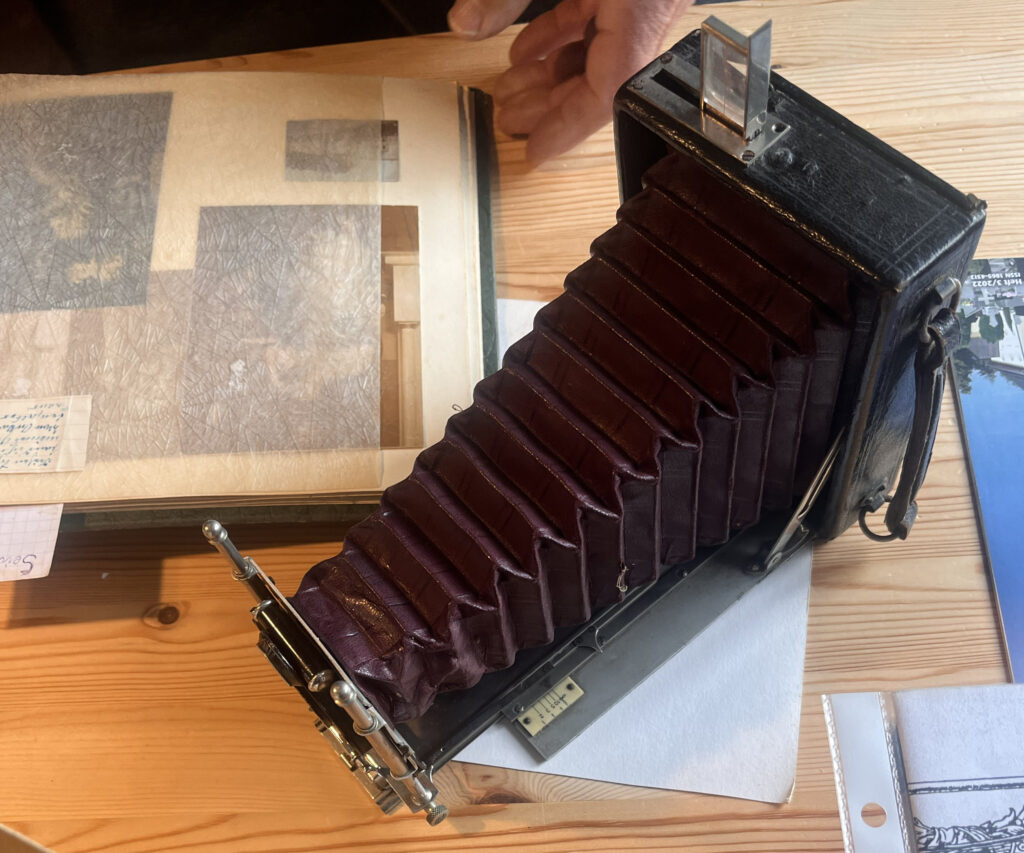
One particular notable item in the archive is Hoecker’s original camera. Hoecker was one of the pioneers of photographic studies: At a time when there were considerable tensions between the arts, there was widespread concern, on the one hand, that photography might supplant painting, whilst, on the other, voices were being raised that regarded painting as outdated. Hoecker, however, recognised the potential of photography to complement his own work as a painter. He used photographs as studies for his paintings, enabling him to capture moments, details and compositions and subsequently incorporate them into his works. The generous donation also includes over 300 photographs by Hoecker, as well as some of his glass negatives.
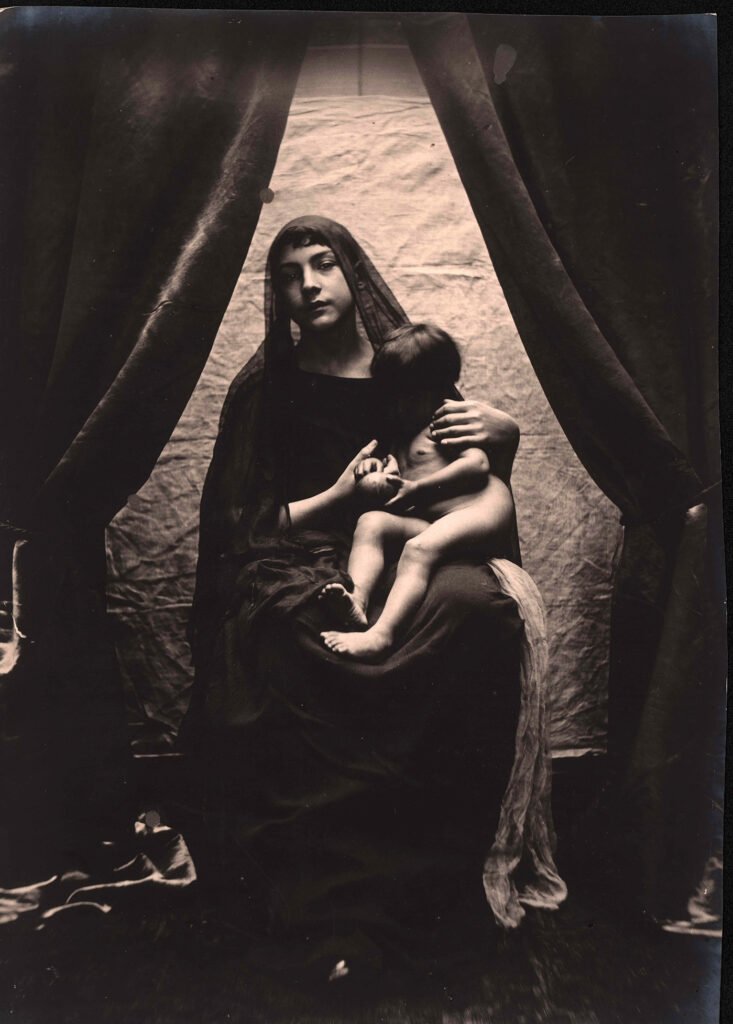
This donation provides further insights into the creation of Hoecker’s paintings. Particularly revealing is the photographic study for his painting Ave Maria (c. 1898), which offers new clues about the model who posed for the Virgin Mary. The suggestion that this might have been a male figure had previously been based on only a few written references that could not be conclusively verified. The question of the model’s identity also points to a scandal that had a decisive impact on Hoecker’s life in 1898: rumours that a male sex worker had posed for the portrait of the Virgin Mary forced him to resign from his professorship.
Neither the model’s exact age nor whether he was a sex worker can be established with certainty. Likewise, any connection to the fictional sex worker Giovanni Bocchi in Achille Essebac’s L’Élu (1902), who is described as a model for a certain “Paul H***”, remains speculative.
It also remains an open question as to what conclusions we can draw from a pictorial representation regarding the relationship between artist and model. When a painter engages a sex worker, this may well be for pragmatic reasons – such as the availability of a suitable model. The model’s youthful age must also be viewed in the context of the time: at the turn of the century, youth was often regarded as a symbol of purity, naturalness and new beginnings. At the same time, we must not overlook the fact that a structural power imbalance exists, particularly when engaging underage or socially dependent models.
A nuanced historical analysis remains open to new findings and would incorporate them critically. In our new publication Splitter 19: Spuren von Paul, we have addressed this topic in detail in the introduction and are continuing to investigate the circumstances that led to the termination of his professorship at the Munich Academy of Fine Arts.
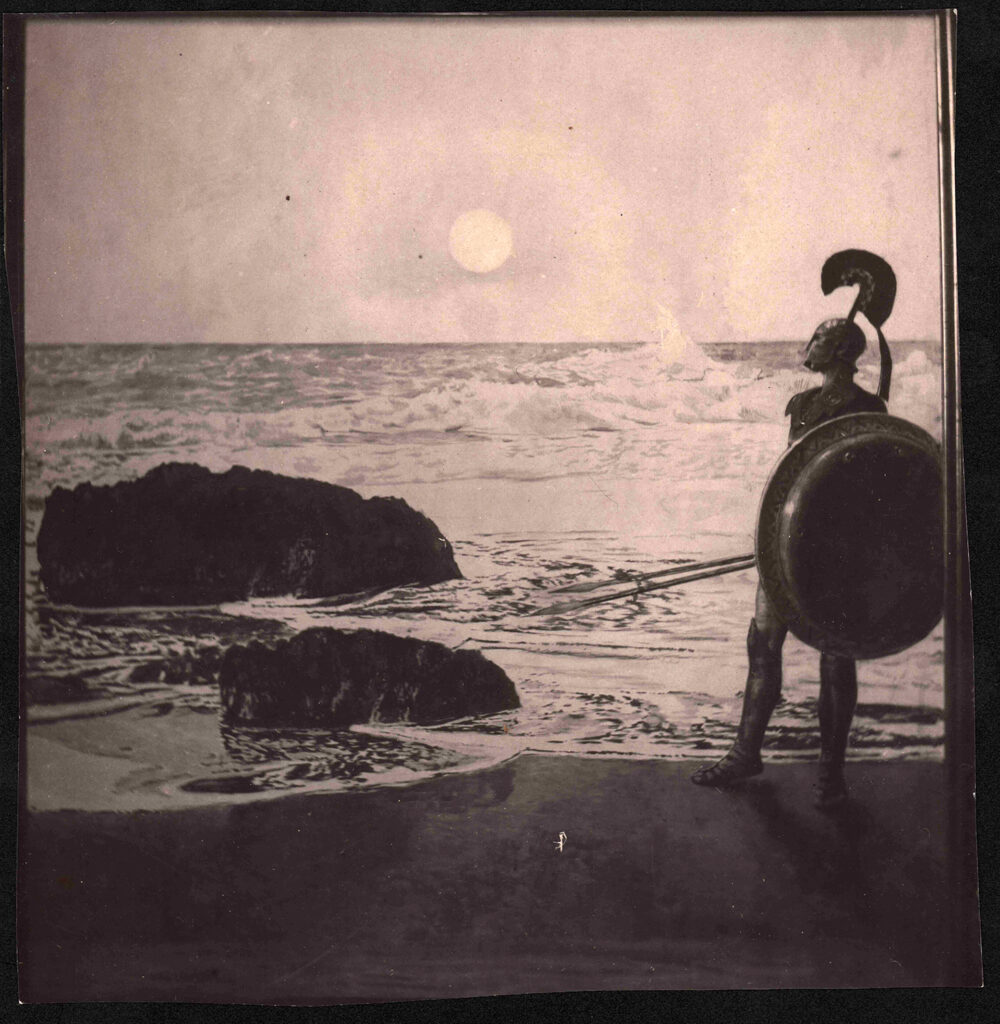
The donation also includes reproductions of previously unknown paintings, which we have added to our regularly updated list of works. In addition, the family estate contains photographs by other artists, including works by the photographer Wilhelm Plüschow, who was acquainted with Hoecker.
Over the past few weeks, we have digitised the estate. It can be viewed during the FQAM’s opening hours, subject to prior booking.
On January 18, 2027, at 7 pm, the art historian Dr Nicholas Maniu from our research group will present the latest findings from our joint investigation in his lecture ‘Sacred Masks and Queer Desire: Paul Hoecker’s Visual Negotiation of Desire’.